Growing a manufacturing business today requires more than simply creating great products or services. Companies must enter new markets, build strong distributor relationships, and reach buyers faster than competitors. This is why many businesses are now working with independent manufacturers reps to increase sales while reducing operational expense.
An experienced rep can help a manufacturer expand into multiple territories, strengthen customer relationships, and improve sales growth without the burden of building a large in-house sales department. In this article, you’ll learn how independent sales models work, why manufacturers use them, and how to find the right representative partnership for long-term business success.
Table of Contents
What Is an Independent Manufacturers Rep?
An independent manufacturers rep is a sales professional who represents a manufacturer on a commission basis instead of working as a salaried employee. These professionals usually operate independently and often manage multiple complementary product lines within the same industry.
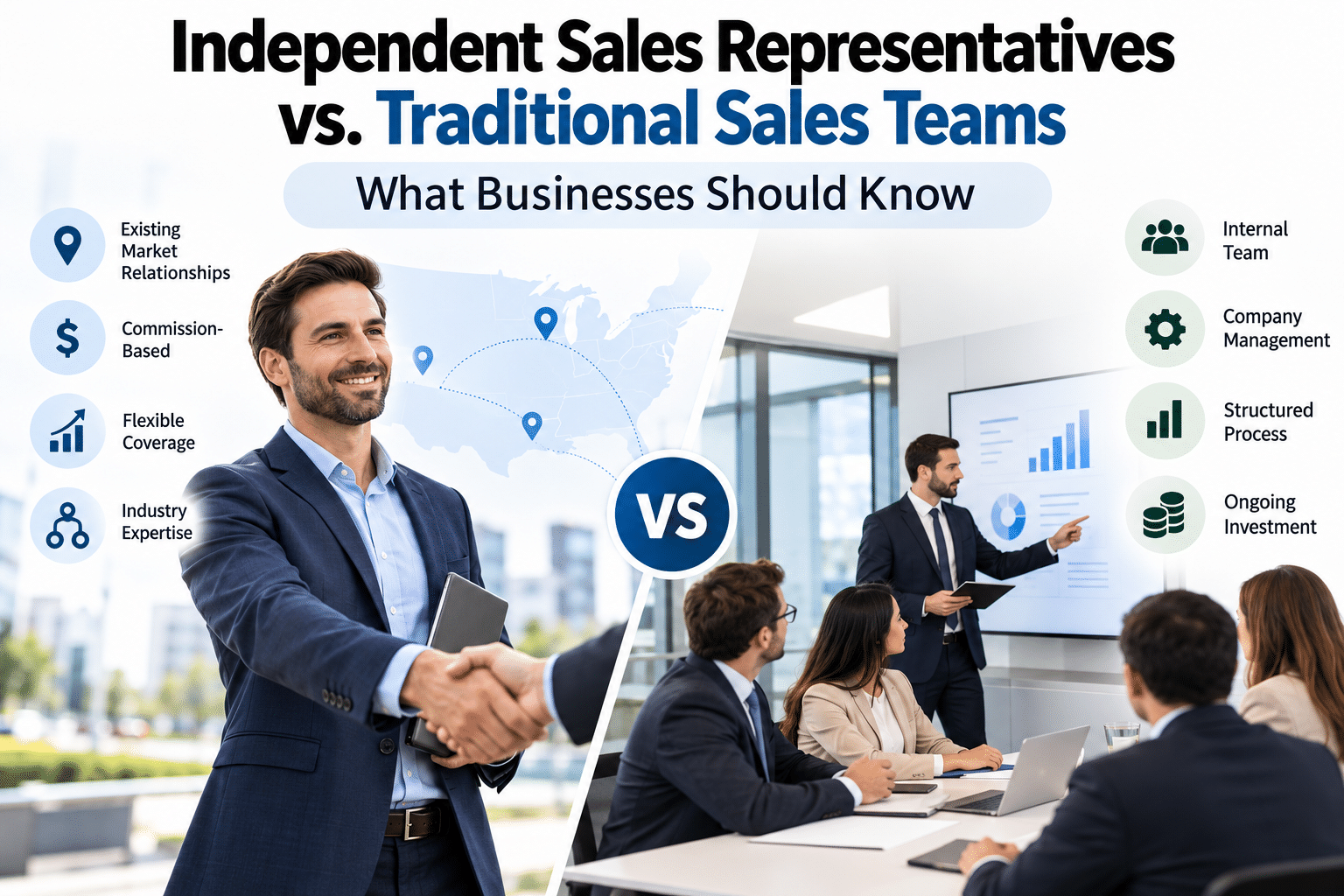
Unlike a traditional in-house sales structure, an independent rep already has established relationships with distributors, buyers, wholesalers, and decision-makers. This gives manufacturers immediate access to a larger customer base and helps shorten the sales cycle.
Many businesses in manufacturing rely on independent sales strategies because they allow companies to expand their reach without making a massive upfront investment in staffing and infrastructure. Rather than hiring a full executive sales department, businesses can partner with professionals who already understand the market.
Why Are Manufacturers Using Independent Sales Reps?
Manufacturers often struggle with the high cost of recruiting, training, and managing a full sales force. Salaries, travel costs, benefits, technology, and customer service operations can quickly increase business expense.
This is why many companies prefer working with commission-only reps. Since compensation depends largely on performance, manufacturers can control risk while still increasing market coverage. Businesses only pay for measurable sales activity rather than maintaining large fixed payroll costs.
An independent sales rep also brings valuable market knowledge and existing buyer relationships. These professionals already know how to sell products effectively within their territory and often understand local purchasing behavior better than newly hired staff.
How Do Independent Reps Help Expand Into New Markets?
Entering a new market can be difficult for companies without local industry connections. Independent reps solve this challenge by bringing an established network of distributors, buyers, and channel partners.
A strong representative can help expand your market faster because they already know the competitive landscape. They understand customer pain points and can actively position your solution against competing brands.
Many manufacturers use outsourcing strategies to grow geographically without opening multiple branch offices. Instead of building a new office in every region, businesses can use a representative agency or rep agencies with proven local experience.
This approach is particularly valuable for companies in electrical, furniture, apparel, and industrial sectors where relationships strongly influence buying decisions.
What Makes Independent Sales Different From In-House Sales?
An in-house sales team usually works exclusively for one company and operates under direct management. While this gives businesses greater control, it also increases operational complexity and cost.
Independent sales professionals operate more flexibly. They typically manage their own schedules, prospecting methods, and sales processes while focusing heavily on revenue generation. Because their income is tied to commission, they are highly motivated to produce results.
Another major difference is scalability. Businesses can quickly expand into new territories without recruiting additional salaried employee teams. This allows manufacturers to remain lean while still increasing sales opportunities.
For many growing companies, combining direct sales with independent partnerships creates the ideal balance between flexibility and control.
How Can Manufacturers Find the Right Representative Agency?
Choosing the right representative agency is one of the most important decisions for a growing manufacturer. The wrong partnership can slow momentum, while the right rep can become a long-term advocate for your brand.
Business owners should evaluate industry specialization, customer relationships, and market experience before signing agreements. A strong manufacturer representative should understand your products or services and know how to communicate value effectively.
Platforms such as Rephunter are often used for sales rep recruiting because they help manufacturers connect with reps in your industry. These directories make it easier to qualify potential candidates and identify professionals with relevant territory expertise.
Companies should also negotiate expectations early, including compensation structure, reporting frequency, sales goals, and exclusive rights within specific territories.
Why Are Relationships So Important in Independent Sales?
One of the biggest advantages of independent sales models is relationship-driven selling. Buyers are more likely to trust a representative who already has a strong reputation within the industry.
An experienced sales representative can build credibility faster than a newly hired employee because they often maintain long-term relationships with distributors and purchasing managers. These existing relationships with distributors can dramatically improve market penetration.
Successful reps and independent sales reps understand that sales is not only about closing deals. It is also about maintaining trust, delivering value, and creating repeat business opportunities.
For manufacturers, this relationship-based approach can lead to stronger customer retention and more sustainable sales growth over time.
How Do Independent Reps Improve Sales Processes?
Modern manufacturers need efficient sales processes to remain competitive. Independent reps often bring structured systems and professional sales experience that improve pipeline management and lead conversion.
Many reps use technology tools and CRM systems to manage customer accounts, track opportunities, and improve communication. This helps manufacturers maintain visibility into the sales cycle while improving forecasting accuracy.
Independent professionals also understand marketing and sales alignment. Since they frequently work across multiple product categories, they know how to position innovative products effectively within competitive markets.
These capabilities help businesses improve efficiency while reaching buyers faster than traditional sales methods.
What Industries Benefit Most From Independent Manufacturers Representatives?
Independent selling models are especially effective in industries where relationships and technical expertise matter. Industrial manufacturing companies have relied on manufacturers’ representative partnerships for decades because trust plays a major role in purchasing decisions.
Industries such as electrical systems, industrial equipment, furniture, plumbing, accessory manufacturing, and apparel frequently use independent sales structures successfully. Businesses in these categories often need regional specialists who understand local buying patterns.
A manufacturer’s representative can also help companies introduce new lines into an existing marketplace more effectively. Since reps already work with buyers, they can position additional offerings naturally within established relationships.
This creates faster opportunities for manufacturers trying to gain market share without expanding internal operations aggressively.
Should Manufacturers Use Independent Reps or Build an Internal Sales Team?
The answer depends on business goals, available resources, and expansion strategy. Building a direct sales operation can work well for organizations that require complete control over messaging and customer interactions.
However, independent models usually require lower upfront investment and can produce results faster. Manufacturers gain access to experienced professionals without the expense of maintaining a large internal team.
Many companies now use hybrid structures that combine in-house and independent selling. This allows businesses to manage strategic accounts internally while using independent reps for regional expansion.
For manufacturers seeking scalable growth, this hybrid approach often provides the best balance between operational efficiency and market reach.
What Should Manufacturers Expect From a Professional Rep Partnership?
A successful partnership goes beyond simple selling activity. A professional rep should act as an extension of your company and help strengthen your market position.
Manufacturers should expect consistent communication, territory reporting, pipeline updates, and proactive customer engagement. A strong partner should also advocate for your brand and represent your business professionally within the marketplace.
The best representatives and independent professionals focus on long-term success rather than short-term transactions. They work to build trust, manage customer expectations, and deliver measurable business results.
Companies should also support their reps with training, product education, and marketing materials. This improves alignment and helps reps communicate value more effectively to buyers.
How Can Businesses Build Long-Term Success With Independent Sales Reps?
Long-term success depends heavily on communication and partnership alignment. Manufacturers that treat reps like strategic partners often see stronger results than businesses that treat them as temporary contractors.
Companies should provide clear expectations regarding territory goals, reporting standards, and customer management responsibilities. Transparency helps avoid misunderstandings and strengthens collaboration.
Regular communication also helps both sides identify opportunities faster. Reps can share market feedback, competitive insights, and customer concerns that help manufacturers improve products and services.
As the relationship grows, businesses gain stronger market access, improved customer loyalty, and greater scalability. This creates a sustainable path for long-term business growth.
Key Takeaways for Manufacturers
- Independent manufacturers reps help businesses increase sales without building large internal teams.
- Manufacturers can expand into new territories faster using existing customer and distributor relationships.
- Commission-based selling reduces financial risk and lowers operational expense.
- Independent professionals often provide stronger market access than newly hired internal staff.
- Businesses can improve sales processes through experienced reps and modern technology tools.
- Industries such as industrial, electrical, furniture, apparel, and manufacturing benefit heavily from independent sales models.
- Platforms like Rephunter can help companies identify qualified reps and independent sales reps.
- Long-term partnerships create stronger customer relationships and more sustainable growth.
- Combining independent and in-house sales strategies can improve scalability and flexibility.
- Choosing the right representative partnership is critical for long-term success and market expansion.