In today’s competitive marketplace, a staggering 73% of businesses struggle to expand their market reach due to budget constraints and resource limitations. Yet, companies that leverage independent sales representatives see an average 35% increase in revenue within the first year, all while maintaining lean operational costs. This powerful strategy transforms how businesses scale without the traditional overhead burden.
Table of Contents
Key Takeaways
- Independent sales representatives provide immediate access to new markets and customer segments without the costs of hiring full-time employees
- Businesses can reduce overhead by 40-60% compared to building an internal sales team while maintaining competitive market presence
- Performance-based compensation models ensure you only pay for results, making it a low-risk expansion strategy
- Independent reps bring established networks and industry expertise that would take years to develop internally
- Scalability and flexibility allow businesses to adjust their sales force based on market conditions and seasonal demands
Understanding the Independent Sales Representative Model
An independent sales representative operates as a self-employed professional who sells products or services on behalf of multiple companies. Unlike traditional employees, these representatives work on a commission-based structure, bringing their own expertise, networks, and resources to drive sales growth.
The fundamental difference lies in the relationship structure. While internal sales teams require salaries, benefits, office space, and ongoing training investments, independent sales representatives function as external partners who are motivated by performance-based compensation.
The Economics of Independent Sales
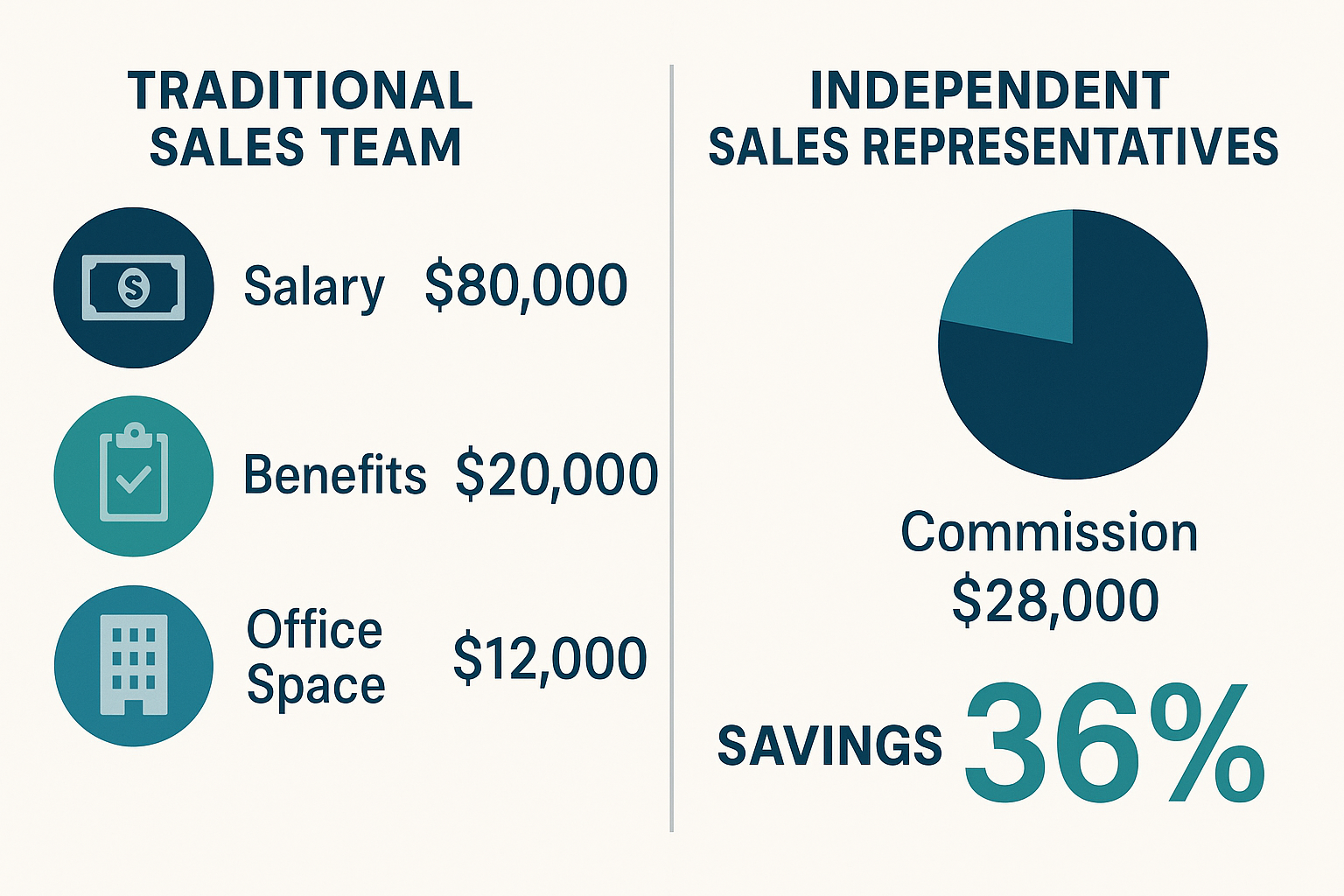
The financial advantages become clear when examining the cost structure:
Traditional Sales Employee Costs:
- Base salary: $50,000-$80,000 annually
- Benefits package: 20-30% of salary
- Office space and equipment: $12,000-$15,000 yearly
- Training and development: $5,000-$10,000
- Management overhead: 15-20% additional cost
Independent Sales Representative Costs:
- Commission-only compensation: 5-15% of sales
- Minimal onboarding expenses: $500-$2,000
- No benefits or office requirements
- Self-managed performance
This structure creates a variable cost model where expenses directly correlate with revenue generation, eliminating the risk of fixed costs during slow periods.
Strategic Benefits of Working with Independent Sales Representatives
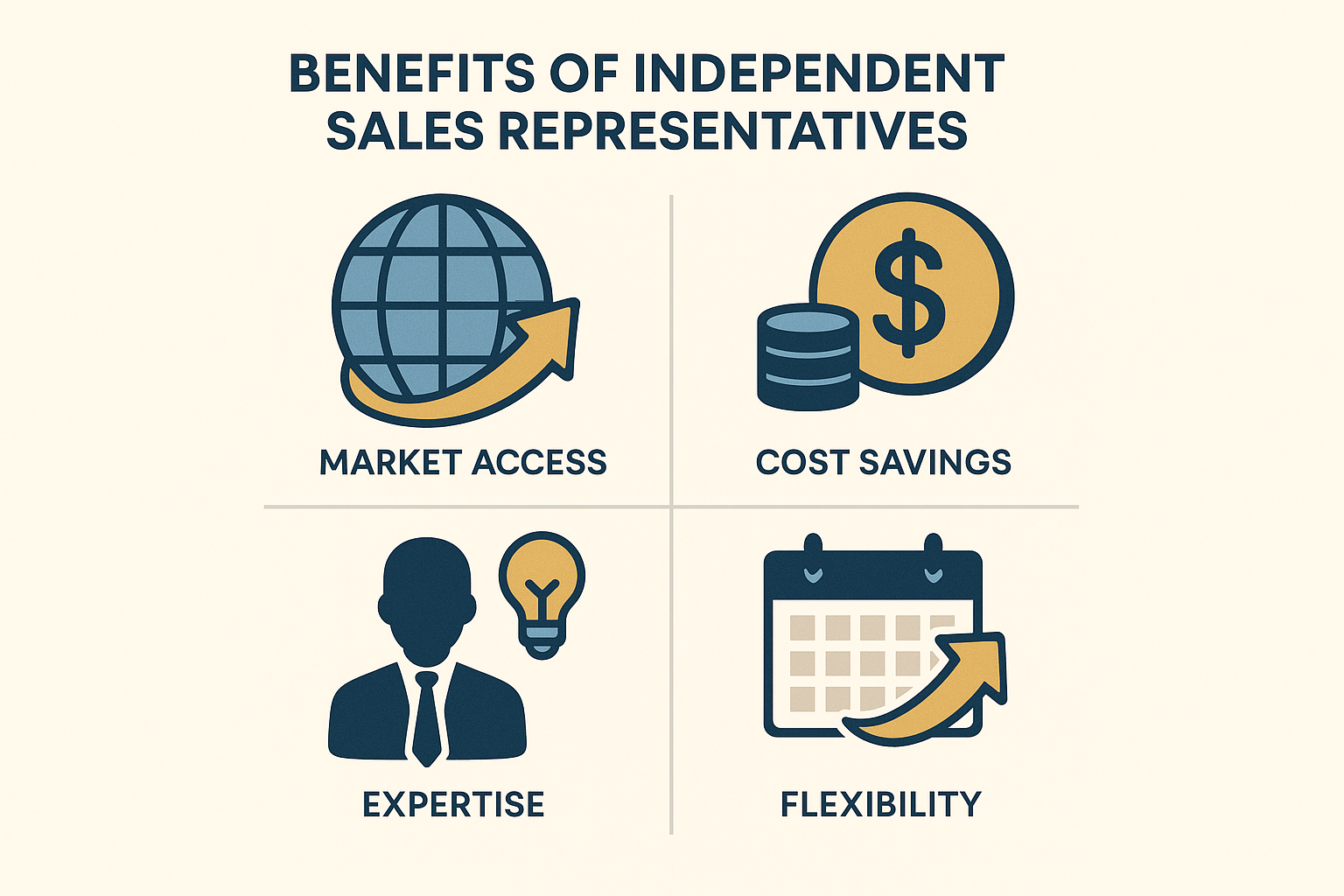
📈 Immediate Market Access
Independent sales representatives typically bring established relationships within specific industries or geographic regions. This network access provides immediate entry into markets that might otherwise take months or years to penetrate.
Consider a manufacturing company looking to expand into the healthcare sector. An independent sales representative with 15 years of medical device experience brings:
- Pre-existing relationships with key decision-makers
- Industry-specific knowledge of compliance requirements
- Understanding of sales cycles and purchasing processes
- Credibility built through years of successful partnerships
💰 Cost-Effective Expansion
The commission-based model creates a self-funding growth mechanism. As sales increase, so does the representative’s compensation, but the percentage remains consistent, ensuring predictable profit margins.
Real-World Example:
A software company partnered with independent sales representatives to expand into three new states. Instead of investing $240,000 in salaries and overhead for three full-time employees, they paid 10% commission on sales. In the first year, representatives generated $1.2 million in revenue, costing the company $120,000 in commissions while maintaining a 70% gross margin.
🎯 Specialized Expertise
Many independent sales representatives focus on specific industries or product categories, developing deep expertise that benefits all their partner companies. This specialization includes:
- Technical knowledge of complex products or services
- Regulatory understanding in heavily regulated industries
- Cultural insights for international or diverse markets
- Established sales methodologies proven in specific sectors
⚡ Flexibility and Scalability
The independent model allows businesses to scale up or down based on market conditions without the complications of hiring or layoffs. During peak seasons, companies can engage additional representatives, while slower periods don’t create financial strain from fixed employee costs.
How Independent Sales Representatives Reduce Business Overhead
Elimination of Fixed Costs
Traditional sales teams create significant fixed expenses that continue regardless of performance. Independent sales representatives convert these fixed costs into variable expenses tied directly to results.
Fixed Cost Elimination:
- Salary expenses become commission payments
- Office space requirements disappear
- Equipment and technology costs transfer to representatives
- Insurance and benefits are no longer company responsibilities
- Training programs become streamlined onboarding processes
Reduced Management Requirements
Independent sales representatives are self-managing professionals who require minimal supervision compared to traditional employees. This reduction in management overhead allows existing staff to focus on core business activities rather than day-to-day sales management.
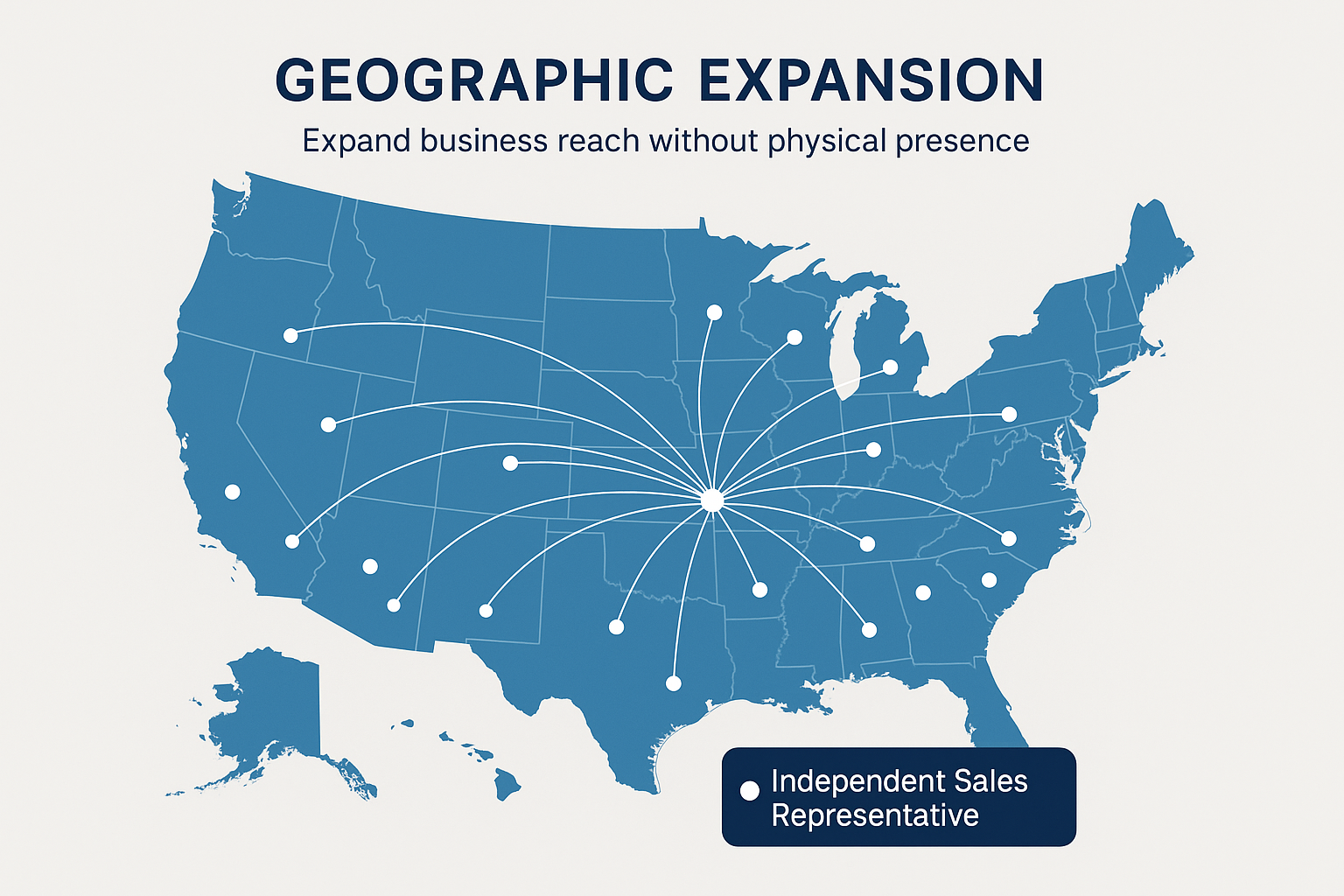
Geographic Expansion Without Infrastructure
Expanding into new geographic markets traditionally requires establishing local offices, hiring regional managers, and building support infrastructure. Independent sales representatives eliminate these requirements by operating from their own established bases.
Case Study:
A Texas-based industrial equipment manufacturer wanted to expand into the Pacific Northwest. Instead of opening a Seattle office with estimated first-year costs of $180,000, they partnered with two independent sales representatives already established in the region. The representatives generated $850,000 in sales during the first year, with total costs of $85,000 in commissions and $3,000 in onboarding expenses.
Building an Effective Independent Sales Representative Network
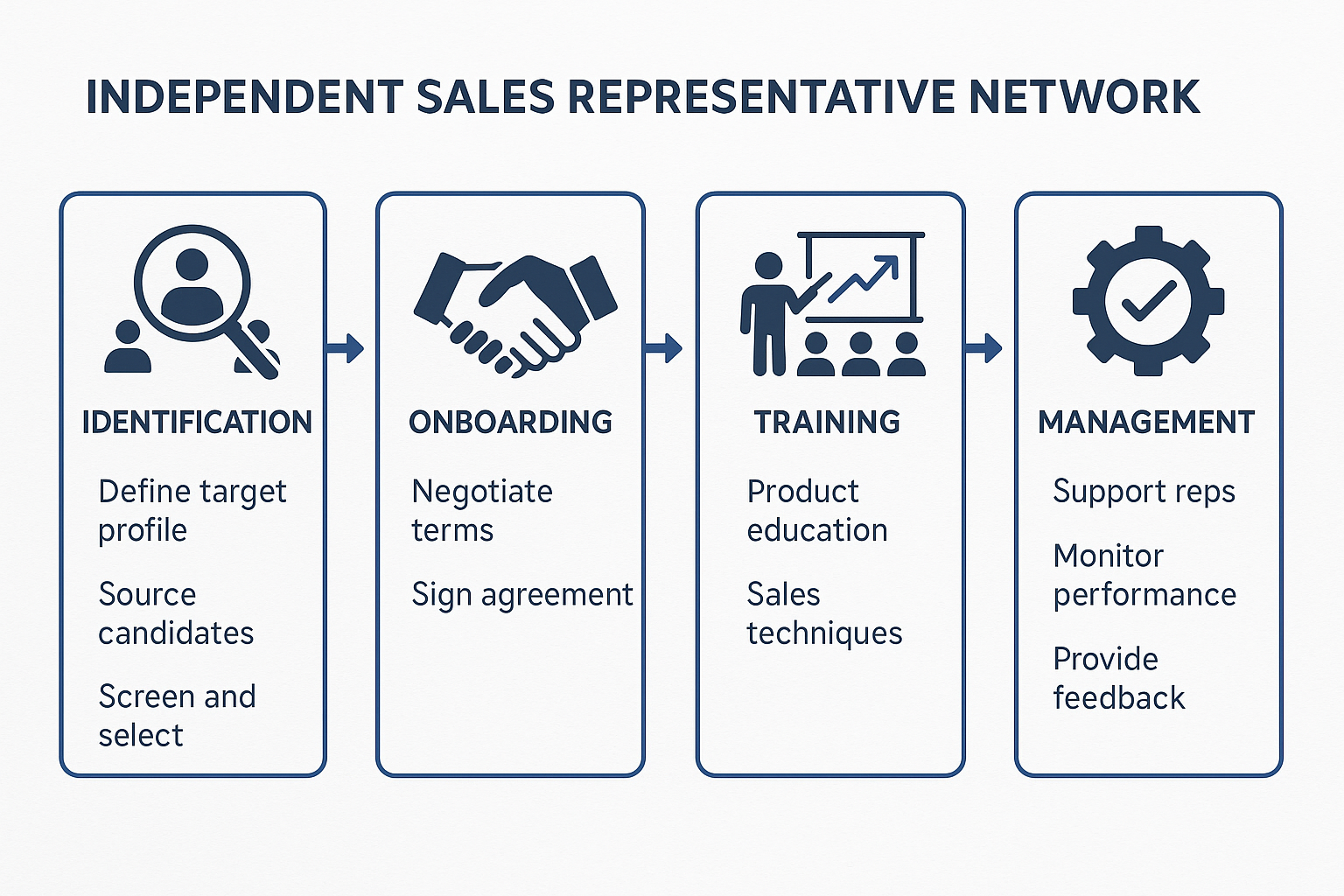
Identifying the Right Representatives
Successful partnerships begin with selecting representatives who align with your business goals and target markets. Key criteria include:
Experience and Track Record:
- Proven sales performance in relevant industries
- Established customer relationships
- Understanding of your product category
- Professional reputation and references
Market Alignment:
- Geographic coverage matching your expansion goals
- Customer base overlap with your target market
- Complementary product portfolio without direct competition
- Cultural fit with your company values
Business Capabilities:
- Financial stability and professional operations
- Technology infrastructure for communication and reporting
- Marketing and presentation capabilities
- Legal compliance and professional licensing
Compensation Structure Design
Creating an attractive yet sustainable compensation structure is crucial for long-term success. Effective models typically include:
Commission Rates:
- Industry-standard rates (typically 5-15% of sales)
- Tiered structures rewarding higher performance
- Bonus incentives for exceeding targets
- Special rates for new account acquisition
Payment Terms:
- Clear payment schedules (monthly, quarterly)
- Defined commission calculation methods
- Prompt payment to maintain motivation
- Transparent reporting systems
Training and Onboarding
While independent sales representatives bring existing expertise, proper onboarding ensures they can effectively represent your brand and products.
Essential Training Components:
- Product knowledge and technical specifications
- Company background and value propositions
- Sales materials and presentation tools
- Pricing structures and approval processes
- Customer service and support procedures
Commission People specializes in connecting businesses with qualified independent sales representatives and provides comprehensive onboarding support to ensure successful partnerships.
Managing and Supporting Your Independent Sales Team
Communication Systems
Effective communication maintains alignment and motivation across your independent sales network. Successful companies implement:
Regular Check-ins:
- Weekly or bi-weekly status calls
- Monthly performance reviews
- Quarterly business planning sessions
- Annual partner meetings or conferences
Technology Platforms:
- CRM systems for lead and customer management
- Communication tools for instant messaging and video calls
- Document sharing platforms for sales materials
- Reporting dashboards for performance tracking
Performance Monitoring
Tracking performance ensures accountability and identifies opportunities for improvement or additional support.
Key Performance Indicators:
- Sales volume and revenue generation
- New customer acquisition rates
- Customer retention and repeat business
- Sales cycle length and conversion rates
- Market penetration in assigned territories
Providing Ongoing Support
Independent sales representatives perform best when they feel supported and valued as true business partners.
Support Services:
- Marketing materials and sales tools
- Technical support for complex products
- Customer service backup for post-sale issues
- Lead generation assistance
- Professional development opportunities
Potential Challenges and Solutions
Quality Control Concerns
Challenge: Maintaining consistent brand representation and customer experience across independent representatives.
Solutions:
- Comprehensive brand guidelines and training
- Regular quality assessments and feedback
- Clear performance standards and expectations
- Ongoing communication and support
- Customer feedback monitoring systems
Loyalty and Commitment Issues
Challenge: Independent representatives may prioritize other companies’ products or reduce effort during slow periods.
Solutions:
- Competitive commission structures
- Exclusive territory agreements
- Performance bonuses and incentives
- Strong relationship building
- Regular recognition and appreciation programs
Communication Gaps
Challenge: Maintaining consistent communication and alignment across a distributed sales network.
Solutions:
- Structured communication schedules
- Technology platforms for real-time updates
- Clear escalation procedures
- Regular training and update sessions
- Documented processes and procedures
Legal and Contractual Considerations
Independent Contractor Classification
Properly classifying representatives as independent contractors rather than employees is crucial for maintaining the overhead advantages while ensuring legal compliance.
Key Classification Factors:
- Control over work methods and schedules
- Financial investment in their own business
- Opportunity for profit or loss based on performance
- Relationship permanency and exclusivity terms
- Integration with your business operations
Contract Essentials
Well-drafted agreements protect both parties and establish clear expectations for the relationship.
Critical Contract Elements:
- Territory definitions and exclusivity terms
- Commission rates and payment procedures
- Performance expectations and termination clauses
- Intellectual property and confidentiality protections
- Dispute resolution procedures
Compliance Requirements
Different industries and regions may have specific requirements for sales representative relationships.
Common Compliance Areas:
- Licensing requirements for representatives
- Insurance and bonding obligations
- Regulatory compliance in specific industries
- Tax obligations and reporting requirements
- Consumer protection laws and regulations
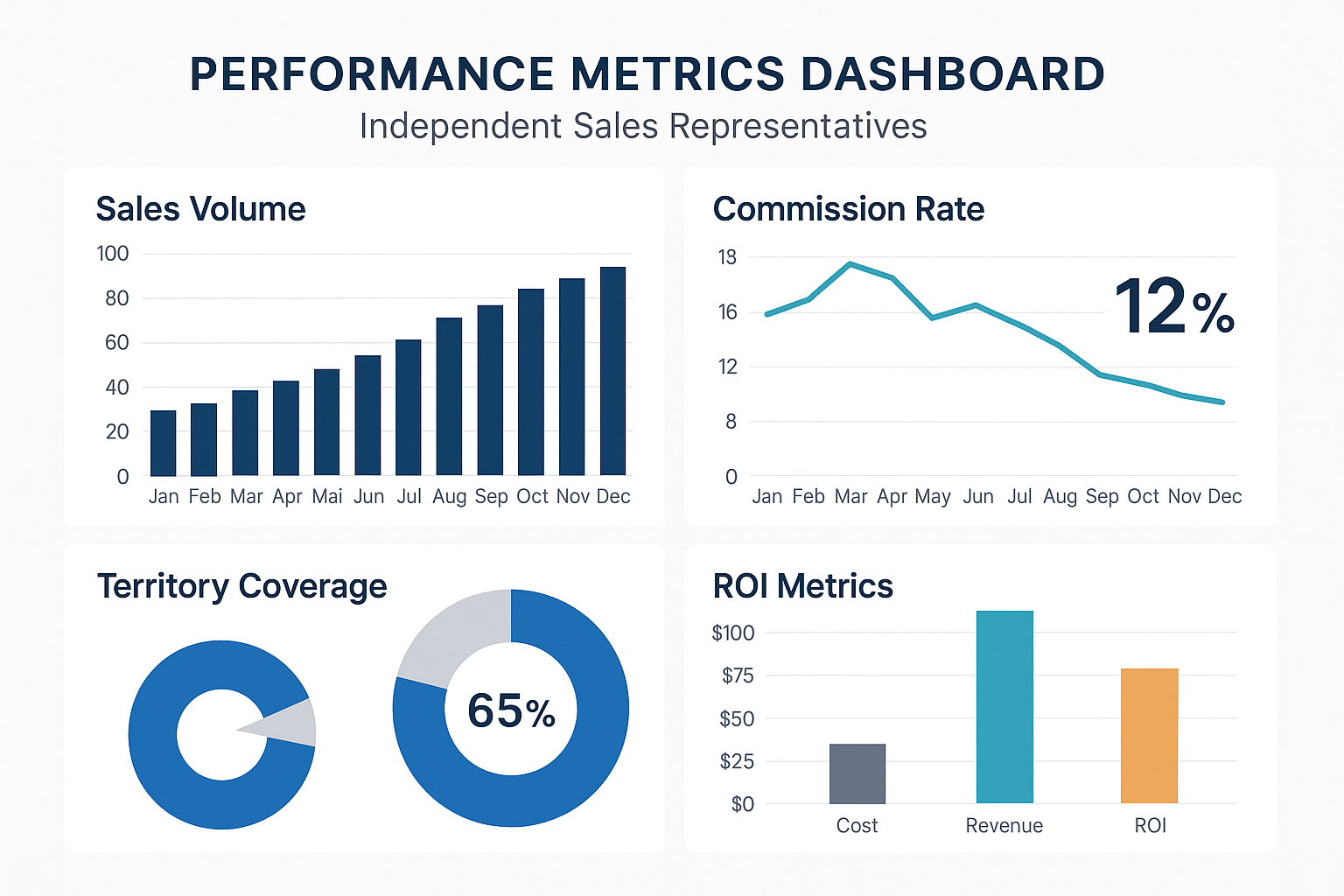
Measuring Success and ROI
Financial Metrics
Tracking the financial impact of your independent sales representative program demonstrates its value and identifies optimization opportunities.
Revenue Metrics:
- Total sales volume generated by representatives
- Revenue growth in new markets or segments
- Customer acquisition cost compared to other channels
- Lifetime customer value from representative-acquired accounts
- Market share growth in target territories
Cost Metrics:
- Commission expenses as percentage of sales
- Onboarding and training costs per representative
- Support and management overhead allocation
- Total cost per sale compared to internal teams
- Break-even time for new representative partnerships
Operational Metrics
Beyond financial measures, operational metrics provide insights into program effectiveness and areas for improvement.
Performance Indicators:
- Time to first sale for new representatives
- Sales cycle length and conversion rates
- Customer satisfaction scores from representative interactions
- Representative retention rates and partnership longevity
- Market coverage and penetration levels
Industry-Specific Applications
Technology and Software
Technology companies particularly benefit from independent sales representatives due to:
- Complex sales cycles requiring specialized expertise
- Rapid market evolution demanding flexible resources
- Geographic expansion needs for global markets
- Vertical specialization requirements
Manufacturing and Industrial
Manufacturing businesses leverage independent representatives for:
- Technical product knowledge requirements
- Long-term customer relationships in B2B markets
- Geographic distribution needs
- Industry-specific expertise in specialized sectors
Healthcare and Medical Devices
Healthcare companies utilize independent representatives because of:
- Regulatory compliance expertise
- Professional relationships with healthcare providers
- Specialized training requirements
- Territory coverage efficiency
Future Trends and Opportunities
Digital Integration
The integration of digital tools and platforms is transforming how independent sales representatives operate:
Technology Enhancements:
- CRM integration for seamless data sharing
- Mobile applications for field sales support
- Video conferencing for remote presentations
- AI-powered lead scoring and prioritization
- Digital marketing support and automation
Hybrid Models
Companies are developing hybrid approaches that combine independent representatives with other sales channels:
Hybrid Strategies:
- Inside sales support for lead qualification
- Digital marketing for lead generation
- Channel partnerships for market expansion
- Direct sales for key accounts
- E-commerce integration for order processing
Independent Sales Rep vs Internal Team ROI Calculator
Internal Sales Team Costs
Independent Sales Rep Model
Cost Comparison Results
Global Expansion
Independent sales representatives are becoming increasingly important for international expansion:
Global Opportunities:
- Cultural expertise in local markets
- Language capabilities for international customers
- Regulatory knowledge for foreign compliance
- Time zone coverage for global support
- Cost-effective international presence
Best Practices for Long-Term Success
Relationship Building
Successful independent sales representative programs are built on strong, mutually beneficial relationships. Companies that treat representatives as true business partners rather than external vendors typically see better performance and longevity.
Relationship Building Strategies:
- Regular communication beyond performance discussions
- Inclusion in company events and strategic planning
- Recognition programs for outstanding performance
- Professional development support and opportunities
- Feedback incorporation in product and process improvements
Continuous Improvement
Regular evaluation and optimization of your independent sales representative program ensures continued effectiveness and competitiveness.
Improvement Areas:
- Compensation structure adjustments based on market conditions
- Training program updates for new products or markets
- Technology platform enhancements for better efficiency
- Performance metrics refinement for better insights
- Support service expansion based on representative feedback
Market Adaptation
Successful programs adapt to changing market conditions and business needs while maintaining core relationship principles.
Adaptation Strategies:
- Territory adjustments based on market opportunities
- Product line expansion or focus changes
- Seasonal variation management and planning
- Competitive response strategies and support
- Economic condition adjustments and flexibility
Conclusion
The strategic implementation of an independent sales representative network offers businesses a powerful pathway to expand market reach while maintaining operational efficiency and cost control. This model transforms traditional fixed sales costs into performance-based investments, creating a sustainable framework for growth that adapts to market conditions and business cycles.
The evidence is compelling: companies utilizing independent sales representatives typically reduce overhead costs by 40-60% while accessing established networks, specialized expertise, and immediate market presence. The commission-based structure ensures alignment between representative success and company growth, creating a win-win partnership that drives results.
However, success requires thoughtful implementation, clear communication, and ongoing relationship management. Companies must invest in proper onboarding, provide adequate support, and maintain professional partnerships that recognize the value independent representatives bring to the business.
Immediate Action Steps:
- Assess your current sales costs and identify opportunities for overhead reduction
- Research potential independent sales representatives in your target markets using platforms like Commission People
- Develop clear compensation structures and partnership agreements
- Create comprehensive onboarding materials and support systems
- Establish performance metrics and communication protocols
- Start with a pilot program in one market or product line to test and refine your approach
The independent sales representative model isn’t just a cost-saving measure—it’s a strategic approach to building a flexible, scalable sales organization that can adapt to changing market conditions while delivering consistent growth. Companies that embrace this model position themselves for sustainable expansion without the traditional constraints of fixed overhead and geographic limitations.
By leveraging the expertise, networks, and motivation of independent sales professionals, businesses can achieve market expansion goals that might otherwise be financially or operationally prohibitive. The key lies in viewing these relationships as true partnerships, where mutual success drives long-term growth and market leadership.